
Harrietsham Church of England Primary School
Nurture
'Nurtured we Flourish'

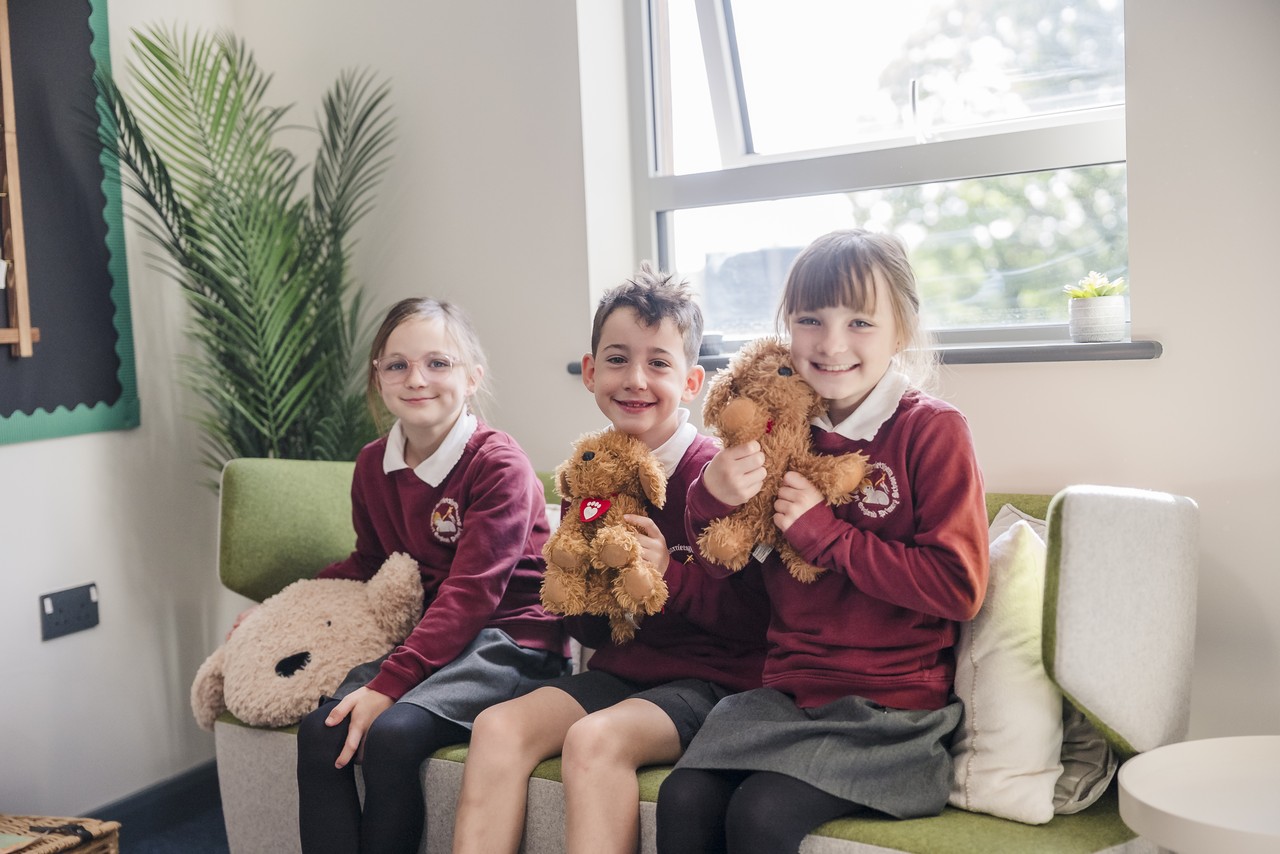
Central to our school vision, nurture is at the heart of all that we do at Harrietsham Church of England Primary School. We strongly believe that children need to be nurtured – socially, emotionally and academically – in order for them to flourish.
Harrietsham Church of England Primary School is currently part of Nurture UK, and we are working towards achieving our National Nurturing Schools Award. Our aim is to achieve excellence in embedding a nurturing culture that responds to the social, emotional and mental health needs of our children, alongside their academic studies.
To find out more about Nurture UK, please click the link below:
"Pupils are gaining a growing sense of personal value and an understanding of how they can manage their own feelings and emotions. ... All speak with great positivity about the value of reciprocal support to enable them to rise above difficulties or challenges."
SIAMs Inspection 2024
Harrietsham's Whole School Approach to Nurture
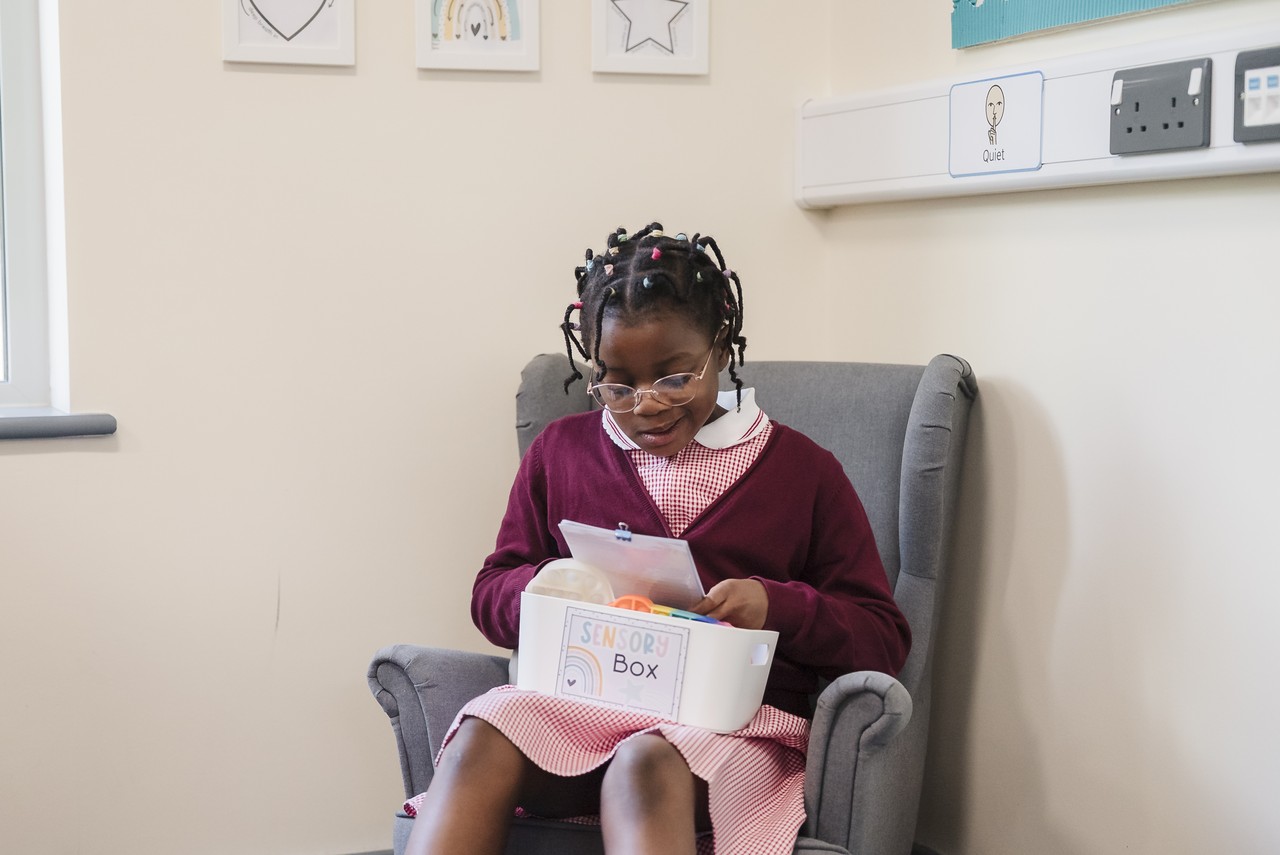
We strive to be a place of nurture for our children, our staff and our families; our school vision is centred around nurture and the relationships that we have with our children and their families are extremely important to us. We believe that a whole school approach to nurture is the best way to support our children.
Children and young people can be faced with difficulties at school or at home which, as well as affecting their mental health, emotional well-being and social skills, can create barriers to learning. To unlock our children's true potential to allow them to flourish, we provide them with the support they need to feel safe at school, to be able to get along with other children, and to develop the confidence and resilience that they need to flourish both academically and in life.
Our nurturing approach is underpinned by our whole school ethos – in the way that we greet the children in the morning, the way we speak to them, the way we approach behaviour management, the way we approach learning. This approach is delivered through Quality First Teaching, and it promotes healthy outcomes for children by responding to their emotional needs. Through a nurturing educational approach, our children develop vital social skills which include developing confidence and self-respect, and learning to take pride in behaving well and in achieving their full potential.
We assess our children's social, emotional and mental health development using the Boxall Profile – This tool provides a precise picture of a child’s strengths, as well as any difficulties which could affect their learning. We can then use these indicators to support our children in the areas that they need it.
To find out more about the Boxall Profile, please click the link below:
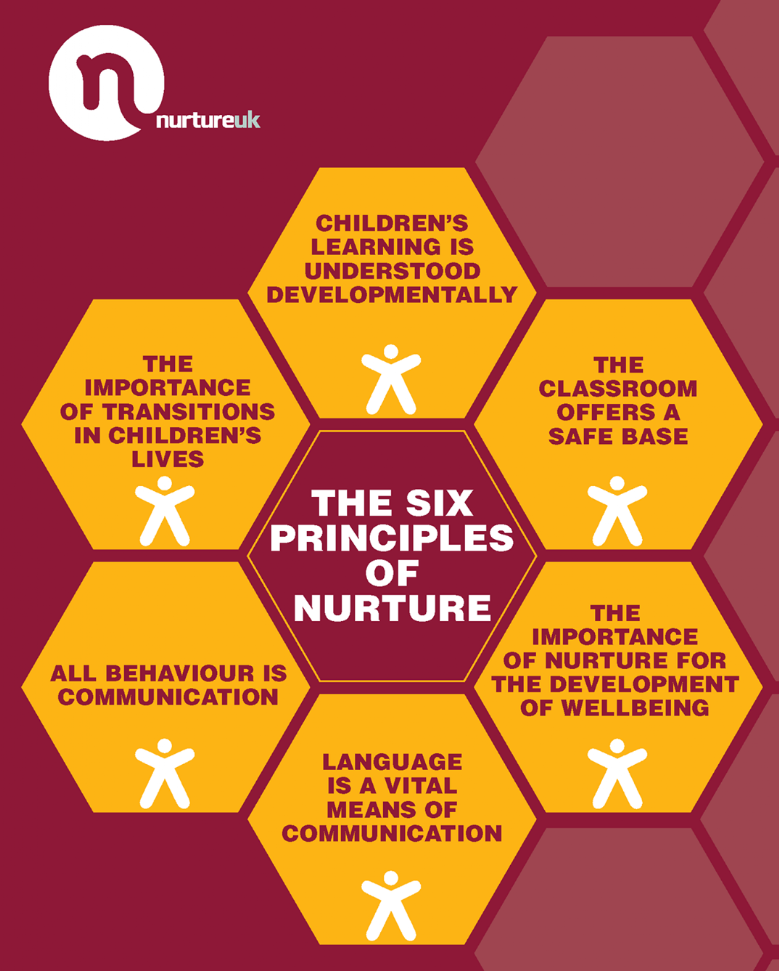 The Six Principles of Nurture
The nurturing approach applied across our school follows 6 key principles.
These principles guide our approach to creating a supportive and enriching environment for all children. These principles are central to our commitment to fostering the emotional, social and academic development of every child. We believe that by adhering to these principles, we can ensure that each child at Harrietsham Church of England Primary School feels safe, valued and understood and ready to reach their full potential.
Children's Learning is Understood Developmentally
We differentiate the curriculum according to the needs of our children. We consider attainment levels but also recognise the children’s developmental progress through the Boxall Profile. Our responses to our children are underpinned by non-judgemental and accepting attitudes.
The Classroom offers a Safe Base
The organisation of our environment and our classroom management helps to reduce anxiety. Classroom time is organised around predictable routines, supported visually where appropriate. Great attention is paid to detail; the adults are reliable and consistent in their approach to our children.
The Importance of Nurture for the Development of Wellbeing
Nurture involves listening and responding. Everything is verbalised – with an emphasis on the adults engaging with our children in reciprocal shared activities. Our children respond to being valued and thought of as individuals – in practice this involves noticing and praising even the smallest of achievements.
Language is a vital means of Communication
Language is more than a skill to be learnt, it is a way of putting feelings into words. Children often ‘act out’ their feelings as they lack the vocabulary to ‘name’ how they feel. We encourage informal opportunities for talking about and sharing our thoughts and feelings. Words are used instead of actions to express feelings and opportunities are created for extended conversations or for encouraging imaginative play to understand the feelings of others.
All Behaviour is Communication
This principle underlies the adult response to a child's challenging behaviour – “Given what I know about this child, what are they trying to tell me?” Understanding what a child is communicating through behaviour helps us to respond in a firm but non-punitive way. If the child feels their behaviour is understood, it can help to diffuse difficult situations.
The importance of Transition in a child’s life
We ensure that transitions are managed appropriately, e.g. between home and school, between sessions, between working with different adults etc. Changes in routine can be difficult for children, and they need to be carefully managed with preparation and support. We have additional support for children who find transitions particularly difficult.
Nurture groups at Harrietsham

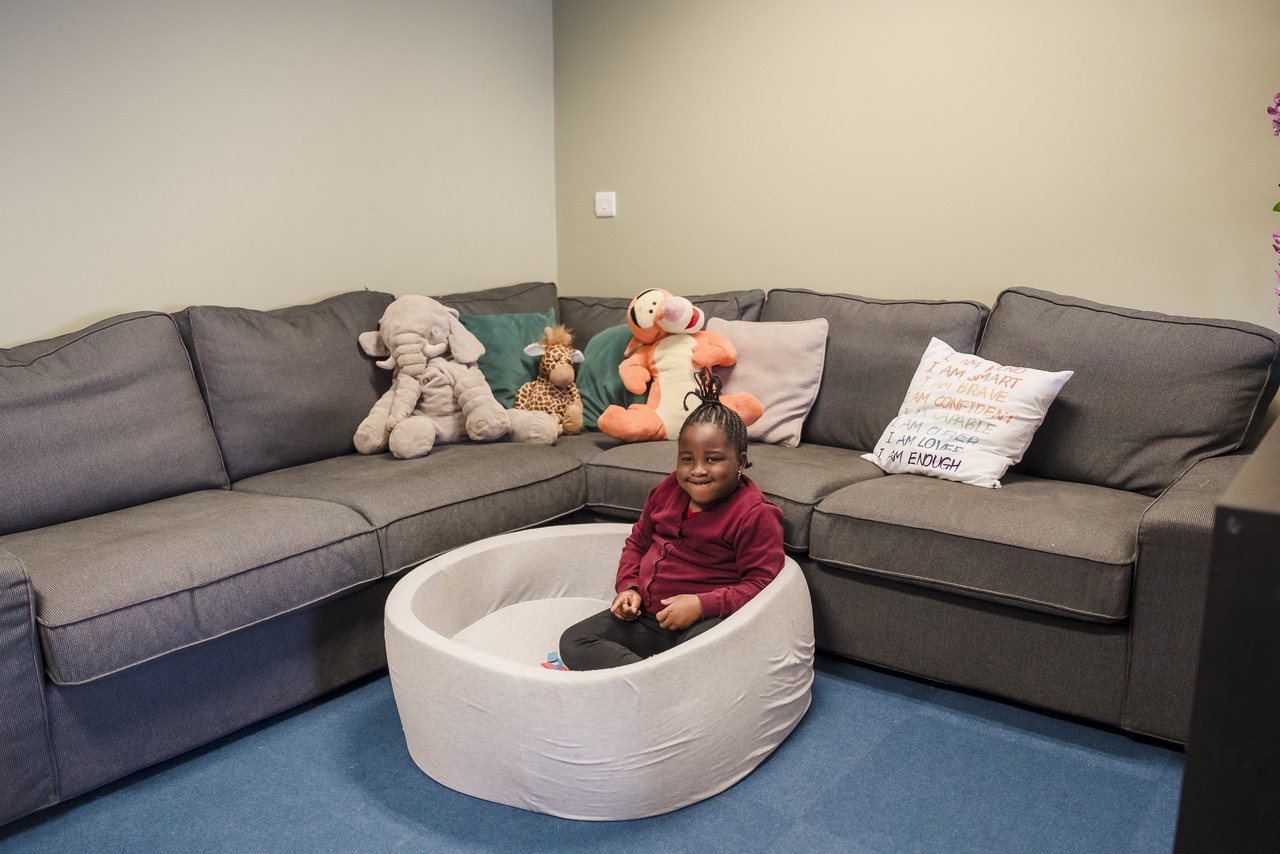
Our children have access to a specially designed nurture room called 'The Nest'.
We run a 'Nurture Breakfast' in this space to allow children a gentler entrance into school in the mornings. If you feel your child would benefit from this extra provision, please do get in touch with the team.
We also have a lunch club where children can come to eat as a group at the dining table and play in a calmer, less noisy environment.
Specific nurture groups are run in our school by fully trained members of our Inclusion and Pastoral Team. These groups are intensive, focused, short-term interventions for children with social, emotional and mental health difficulties which may make it harder for them to learn in a mainstream classroom. These groups are an intervention which are put in place in conjunction with parents and there are specific targets that are worked towards with regular reviews.
The aim of our nurture groups is to replace missing early experiences by developing positive pupil relationships with both teachers and peers in a supportive environment. Within our nurture groups, there is a special emphasis on language development and communication: nothing is taken for granted and everything is clearly explained by the staff, with the help of demonstrations and (where helpful) physical gestures. Pupils are given the time they need to both listen and be listened to. Nurture groups are also designed to give pupils vital opportunities for social learning – for example, by encouraging them to share ‘snack time’ and to help other children in the group.
To find out more about Nurture Groups, please click the link below:
Our Nurture Curriculum
Nurture forms part of our Personal Development Curriculum.
- To find out more about our Personal Development Curriculum, click here: /personal-development-at-harrietsham.
- To see our Nurture Curriculum overview, click the link: Nurture Curriculum Overview.
Nurture Leadership


Mrs Evans and Mrs Griffin lead Nurture at our school. For more information about Nurture at our school, please contact them via the school office.